
Mumbai, India's financial capital, is set for a mega transformation with a massive patch of land opening up for redevelopment; a new metro railway ready to start services by the year-end; and the country's oldest railway station, the Chhatrapati Shivaji Terminus, going for modernisation with private sector participation. Work on Mumbai's second airport will start from next month, while construction of the sea link connecting central Mumbai to Navi Mumbai has already moved into a fast lane despite Covid-induced lockdowns. Also, a coastal road project, connecting Nariman Point to Worli, is under way and will help decongest the city to quite an extent. Of all these mega infrastructure projects, the one that has a huge potential to change the city's skyline is the Eastern Waterfront project - to be built on the Mumbai Port Trust (MbPT) land.
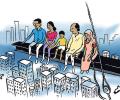
MahaRERA, the authority under Real Estate (Regulation and Development) Act, 2016, in Maharashtra, has blacklisted 644 housing projects in the state for not meeting project deadlines. The authority has prohibited them from being sold, advertised or marketed in the state. These projects were supposed to be completed and handed over to homebuyers in 2017 and 2018. Even though most of the projects are being developed by local developers, one big name on the list is Lavasa Corporation promoted by HCC whose registration expired in 2017.

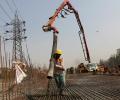
The key demand drivers -- such as low home loan rates and income tax sops, particularly for affordable housing -- that supported the recovery in H2 FY2021, remain in place and will spur recovery again, feel experts.

Mumbai recorded a 4x growth in property registrations on a yearly basis in June this year, as restrictions imposed by the state government ended. Mumbai and its suburbs recorded property registrations of 7,857 units in June, compared to 1,839 units registered in June 2020. The registrations for June were also 39 per cent higher, compared to the same month in the pre-pandemic period of June 2019, said a new report by Knight Frank India.
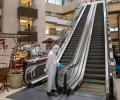
While there was a sharp drop in footfalls in malls in H1FY21, there was reasonable recovery in H2. However, the second wave derailed the recovery.
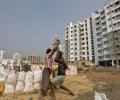
With the arrival of the second Covid wave in April, the numbers fell by almost 50 per cent.

From helping their employees infected with the Covid-19 virus to vaccinating them or supporting the families of those who might have succumbed to the infection, several companies in India are trying to do their bit in this difficult time. Some have even widened their support net to include all stakeholders as well as an extended community. To the families of the employees it lost to Covid-19, Noida-headquartered IT services and consulting company HCL Technologies is, for instance, paying salary for a year, medical insurance for three years and extending support for their children's education for five years.

Consultants who help lease these properties say this is the steepest decline at least in a decade.

Durable goods companies and retailers say online sales won't compensate for the fall in offline sales.

About 7 per cent was priced between Rs 3 crore and Rs 5 crore, 22 per cent priced between Rs 5 crore and Rs 8 crore, and 15 per cent above Rs 8 crore.

Warehousing and logistics segment has been among the most resilient asset classes in the pandemic.

Although residential sales faced a major set back in Q2, they made a comeback with help of pent up demand.

Prices of all metals - from steel to copper, aluminium, zinc and lead - have shot up by about 5-11 per cent in the past month. Commodity inflation is raising its head, forcing companies to consider price hikes.
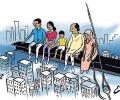
Mumbai Metropolitan Region recorded housing sales of nearly 9,200 units in Q3 of calender 2020, against 3,620 units in the preceding quarter, registering a 1.5 times growth which is the highest growth seen any city except Chennai.

The Kanakia group, from which Mapletree did the purchase, had bought the plot from India Tube Mills and Metal Industries for Rs 363 crore in 2018.

The Q3 office rebound growth was led by Bengaluru and Hyderabad, which together accounted for nearly 80 per cent of the net absorption in Q3.

Women leaders, succession planners and lawyers say doors in family businesses are opening but a stronger push is needed.

Experts attribute this trend to a combination of end of capital expenditure cycle, increased automation, RIL's preference for time-bound labour contracts, and telecom and retail's outsourced human resource model.

Experts point out teaching in its online avatar helps address women specific concerns, like care-giving responsibilities, lack of safe public and work spaces, and the inability to move to cities.
 © 2026 Rediff.com - Advertise with us - Disclaimer - Privacy Policy - Sitemap - Feedback - About us - Terms of use - Grievances